The Problem
Why most scribes struggle
Scribing is not difficult because of typing — it is difficult because of thinking. The gap between where you start and where you need to be is massive, and most scribes have no roadmap to close it.
This is where most scribes fail — they treat the role like data entry instead of clinical translation.
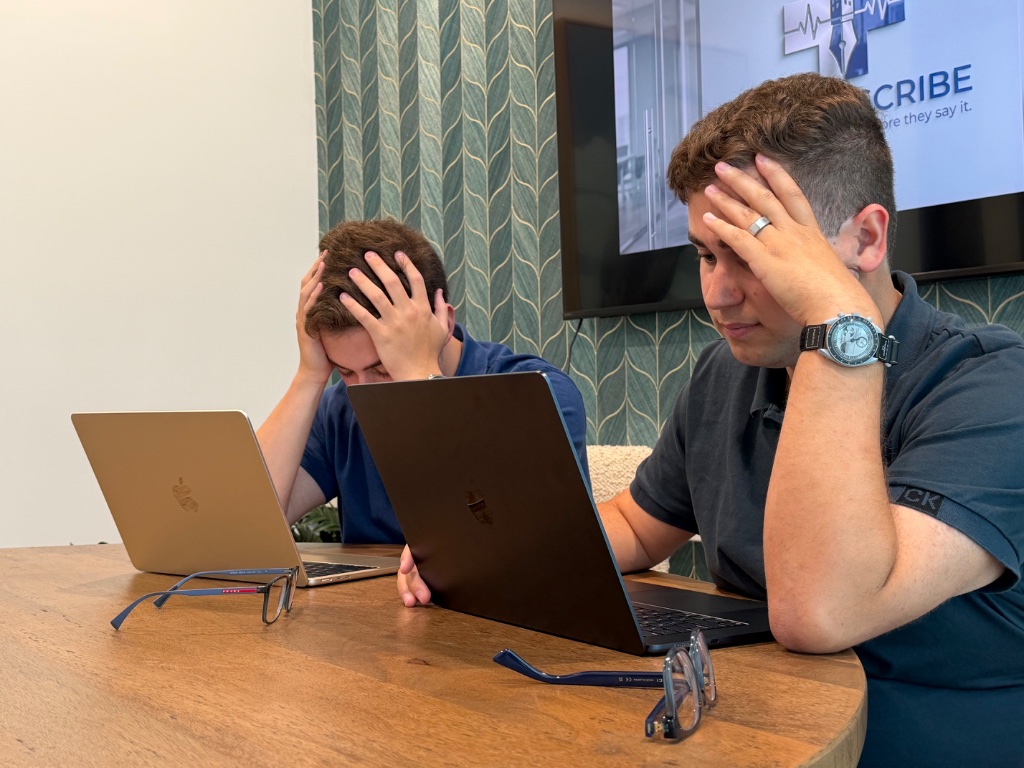
The Six Silent Killers
These are the real reasons scribes plateau — and most never even realize it.
Information Overload
Providers speak in fragmented thoughts, shorthand, and assumptions. Patients speak in stories, emotions, and disorganized timelines. You're expected to make sense of both — in real time.
The Typing Trap
Most scribes think the job is about typing fast. They focus on speed alone, producing messy notes that providers have to rewrite. Fast typing without quality leads to poor documentation.
No Structured Training
There's no standard playbook for becoming excellent. Most scribes learn by trial and error, repeating the same mistakes for months without a clear system to follow.
Imposter Syndrome
The pressure, the pace, and the steep learning curve lead capable individuals to doubt themselves. Some even walk away from the medical path, believing they're not cut out for it.
Stuck at Average
Most scribes become functional but never exceptional. They document without deeper understanding and remain at the same skill level over time, shift after shift.
Broken Feedback Loop
When providers have to reword your HPI, fix your grammar, or reorganize your chart — you're slowing them down. And they notice. Trust erodes silently.